
Most American travelers believe that cultural tours are reserved for academics or art enthusiasts, but studies show that over 60 percent of travelers are seeking more meaningful cultural experiences today. Misconceptions often prevent people from discovering the true depth these journeys offer. This guide uncovers how cultural tours go well beyond sightseeing, revealing authentic ways Americans can connect with global traditions and gain deeper insight into diverse communities.
Table of Contents
- Cultural Tours Defined And Common Misconceptions
- Types Of Cultural Tours And Their Distinctions
- Key Benefits Of Authentic Cultural Encounters
- Risks, Challenges, And Responsible Tourism
- Comparing Cultural Tours With Other Travel Options
Key Takeaways
| Point | Details |
|---|---|
| Cultural Tours Foster Engagement | Unlike traditional tourism, cultural tours emphasize active participation and meaningful interactions with local communities. |
| Variety in Cultural Tourism | Cultural tourists have different motivations and styles of engagement, ranging from purposeful exploration to incidental encounters. |
| Importance of Responsible Tourism | Successful cultural tourism prioritizes respect for local communities and seeks to avoid cultural commodification while promoting genuine exchanges. |
| Transformative Experiences | Authentic cultural encounters lead to personal growth, enhanced empathy, and improved cultural understanding, reshaping travelers’ perspectives. |
Cultural Tours Defined and Common Misconceptions
Cultural tours represent far more than mere sightseeing – they are immersive journeys into the heart of human experience. At their core, these tours provide travelers with opportunities to actively engage with local traditions and ways of life, moving well beyond superficial observations. Unlike traditional tourism that often skims the surface, cultural tours invite participants to understand, respect, and meaningfully interact with diverse communities.
Contrary to popular belief, cultural tourism is not exclusively reserved for art historians or academic researchers. Instead, these experiences are accessible to travelers of all backgrounds and interests. As research from Tourism Management reveals, cultural tours involve active participation rather than passive observation, challenging the misconception that such experiences are limited to elite or academic pursuits. Whether exploring traditional festivals, learning indigenous crafts, or sharing meals with local families, these tours offer profound insights into human diversity.
Most travelers incorrectly assume cultural tours follow a standardized template, but the reality is far more nuanced. Each cultural tour represents a unique narrative, shaped by the specific community, its traditions, and the travelers’ willingness to engage authentically. Guided tours in Ethiopia, for instance, might include experiences like witnessing traditional coffee ceremonies in rural villages, participating in local festivals, or understanding complex social structures through personal interactions. These journeys are about connection – bridging gaps between different ways of life and fostering mutual understanding.
Key aspects that distinguish genuine cultural tours include:
- Deep respect for local communities
- Opportunities for meaningful interaction
- Educational components that provide context
- Authentic, non-performative experiences
- Sustainable approaches that benefit local populations
By choosing cultural tours, travelers transform from mere spectators to active participants in global human stories, creating memories that transcend typical tourist experiences.
Types of Cultural Tours and Their Distinctions
Cultural tours are not a monolithic experience, but rather a diverse landscape of travel opportunities that cater to different interests and engagement levels. Research in tourism management reveals that cultural tourists can be categorized into distinct types, each representing a unique approach to exploring human experiences. These variations range from casual observations to deeply immersive interactions that transform travelers’ understanding of diverse societies.

Researchers have identified five primary types of cultural tourists, each characterized by different motivations and levels of engagement. Purposeful cultural tourists are the most committed, actively seeking profound cultural experiences and dedicating significant time to understanding local traditions. Serendipitous travelers remain open to unexpected cultural encounters, while sightseeing tourists tend to approach cultural experiences more superficially. Incidental tourists might stumble upon cultural experiences during broader travel, and casual tourists engage with culture minimally and opportunistically.
Custom tours designed for cultural exploration can accommodate these varying levels of interest. Some travelers prefer structured experiences that provide deep historical context, while others seek more spontaneous interactions. Study tours, for instance, represent a specialized category that accelerates cross-cultural understanding by immersing participants in authentic local environments. These experiences go beyond traditional tourism, offering transformative opportunities to engage with different cultural practices and perspectives.
Key distinctions among cultural tour types include:
- Depth of cultural engagement
- Level of traveler motivation
- Structured versus spontaneous experiences
- Academic versus experiential learning
- Personal versus group-oriented interactions
Ultimately, the most meaningful cultural tours transcend simple categorization, creating space for personal growth, mutual understanding, and genuine human connection across diverse global contexts.
Key Benefits of Authentic Cultural Encounters
Exploring Ethiopia’s heritage reveals the profound transformative power of authentic cultural encounters. Research demonstrates that these experiences are far more than simple travel moments – they are opportunities for deep personal growth and global understanding. Authentic cultural interactions go beyond surface-level tourism, creating meaningful connections that challenge preconceived notions and expand travelers’ perspectives on human diversity.
Studies in Tourism Management highlight that genuine cultural encounters lead to significant personal development. These experiences cultivate enhanced empathy by allowing travelers to directly engage with different ways of life, breaking down cultural barriers and fostering genuine human connections. Participants often report dramatic shifts in their worldview, developing a more nuanced understanding of global diversity that extends far beyond traditional educational experiences.
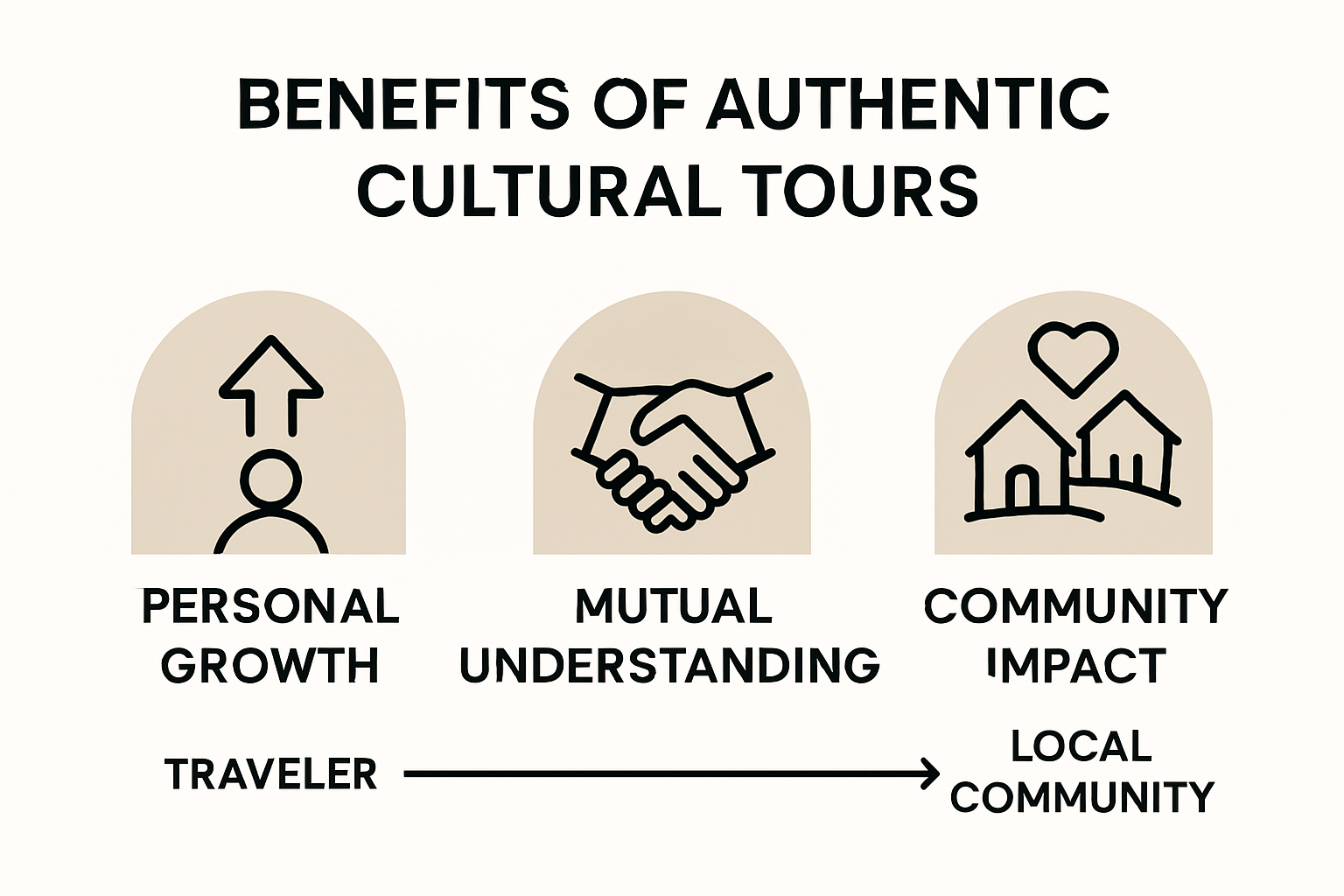
The impact of authentic cultural encounters extends well beyond personal transformation. Intercultural communication skills are dramatically improved through direct, meaningful interactions with local communities. Travelers learn to navigate cultural differences with sensitivity, developing adaptive communication strategies that prove valuable in both personal and professional contexts. These encounters accelerate cross-cultural understanding, creating bridges between seemingly different worlds and challenging existing cultural assumptions.
Key benefits of authentic cultural encounters include:
- Profound personal growth
- Enhanced global perspective
- Increased cultural empathy
- Improved communication skills
- Deeper understanding of human diversity
Ultimately, these encounters represent more than travel experiences – they are opportunities for human connection, mutual understanding, and personal transformation that reshape how we perceive ourselves and the world around us.
Risks, Challenges, and Responsible Tourism
Tour operators play a critical role in navigating the complex ethical landscape of cultural tourism. Research reveals significant challenges that can undermine the integrity and authenticity of cultural encounters. Responsible tourism demands a nuanced approach that respects local communities, preserves cultural heritage, and mitigates potential negative impacts of travel experiences.
One of the most significant risks in cultural tourism is the potential for cultural commodification, where traditional practices become reduced to mere entertainment for travelers. Scholarly research highlights how unmanaged tourism can transform authentic cultural expressions into performative spectacles, ultimately diminishing their genuine meaning and social significance. This process not only misrepresents local traditions but can also create economic dependencies that fundamentally alter community dynamics.
Exploring destinations safely requires travelers and tour operators to be acutely aware of potential cultural misunderstandings. The risk of reinforcing harmful stereotypes is real, making it essential to approach cultural interactions with deep respect, humility, and a commitment to genuine understanding. Responsible tourism means creating experiences that prioritize mutual learning, respect local agency, and ensure that communities benefit directly from cultural exchanges.
Key principles of responsible cultural tourism include:
- Prioritizing local community perspectives
- Ensuring fair economic compensation
- Minimizing environmental and cultural disruption
- Promoting genuine cross-cultural understanding
- Protecting indigenous cultural practices
- Supporting local economic sustainability
Successful cultural tourism transforms from a potential source of exploitation into a powerful vehicle for mutual understanding, respect, and meaningful human connection.
Comparing Cultural Tours With Other Travel Options
Historical tours of Ethiopia reveal the profound differences between cultural tours and conventional travel experiences. Unlike standard vacation packages focused on leisure and relaxation, cultural tours offer a transformative journey of deep engagement and learning. Immersive travel goes beyond surface-level sightseeing, inviting travelers to genuinely connect with local communities and understand their unique cultural contexts.
Research demonstrates significant distinctions between cultural tours and alternative travel options. Where conventional tourism often prioritizes comfort and entertainment, cultural tours center on meaningful interaction and personal growth. Experiential learning distinguishes these tours from adventure tourism, which typically emphasizes physical activities and adrenaline. Cultural tours prioritize understanding heritage, traditions, and social dynamics, creating opportunities for profound cross-cultural comprehension.
Local guides play a critical role in differentiating cultural tours from other travel experiences. They transform journeys from passive observation to active participation, providing nuanced insights that standard guided tours cannot match. While adventure tours might offer exciting physical challenges and beach vacations promise relaxation, cultural tours deliver intellectual and emotional enrichment that fundamentally expands travelers’ worldviews.
Key comparative distinctions include:
- Depth of cultural engagement
- Learning versus leisure focus
- Personal transformation potential
- Interaction quality
- Intellectual and emotional impact
- Authenticity of experience
Ultimately, cultural tours represent a sophisticated approach to travel that values human connection, mutual understanding, and personal growth over mere consumption of scenic landscapes or recreational activities.
Discover the True Value of Cultural Tours with Spectrum Ethiopia Tours
Many travelers struggle to find authentic cultural experiences that go beyond surface-level sightseeing and foster genuine human connection. This article highlights key challenges such as avoiding cultural commodification and ensuring meaningful engagement with local communities. Spectrum Ethiopia Tours understands these challenges and addresses them by providing deeply immersive tours that prioritize respect, education, and responsible tourism. Our expert local guides and customized itineraries create opportunities for real interaction that leads to personal growth and a lasting global perspective.
Experience firsthand the impact of authentic cultural encounters through our signature journeys like the South Omo Valley cultural tour, the Danakil Depression expedition, or the Northern Historic Route. We carefully design every trip to foster mutual understanding while supporting local communities sustainably. When you choose Spectrum Ethiopia Tours, you are choosing meaningful travel that transforms you from a visitor into an active participant in Ethiopia’s rich cultural story.
Explore our full range of authentic journeys and start your transformative experience today.
Ready to move beyond typical sightseeing? Visit Spectrum Ethiopia Tours now and book your personalized cultural adventure with trusted experts who care. Make your next trip truly unforgettable and impactful.
Frequently Asked Questions
What are cultural tours?
Cultural tours are immersive experiences that allow travelers to engage actively with local traditions, customs, and lifestyles, offering insights into diverse communities beyond mere sightseeing.
How do cultural tours differ from traditional tourism?
Cultural tours prioritize meaningful interactions and deep engagement with local cultures, while traditional tourism often focuses on superficial observations and leisure activities.
What benefits can travelers gain from authentic cultural encounters?
Travelers benefit from authentic cultural encounters through personal growth, enhanced empathy, improved communication skills, and a deeper understanding of global diversity.
What are the risks associated with cultural tourism?
Risks include cultural commodification, potential misunderstandings, and the reinforcement of stereotypes. Responsible tourism practices are essential to mitigate these challenges and ensure respect for local communities.
Recommended
- Why Invest in Guided Travel: Complete Guide – Spectrum Ethiopia Tours
- 7 Key Benefits of Guided Tours in Ethiopia Explained Clearly – Spectrum Ethiopia Tours
- Complete Guide to Custom Tours: Key Features and Types – Spectrum Ethiopia Tours
- How to Book Cultural Tours Ethiopia for Authentic Experiences – Spectrum Ethiopia Tours