
American travelers increasingly seek deeper cultural experiences with every journey, and the Omo Valley offers one of Africa’s most remarkable opportunities. More than 40 distinct ethnic groups live in this region, each with traditions unlike anywhere else in the world. Learning the best timing, how to connect with local guides, and ways to respectfully participate in village life ensures your adventure is both meaningful and memorable.
Table of Contents
- Step 1: Choose The Ideal Time And Tour Route
- Step 2: Arrange Travel Documents And Essentials
- Step 3: Connect With Local Culture And Guides
- Step 4: Participate In Authentic Village Activities
- Step 5: Respect Local Traditions And Verify Impact
Quick Summary
| Key Insight | Explanation |
|---|---|
| 1. Travel During Optimal Season | Plan your visit between October and March for warm weather and better accessibility in the Omo Valley. |
| 2. Use Local Guides | Engage local guides to enhance your understanding and ensure respectful interactions with tribal communities. |
| 3. Prepare Essential Documents | Secure necessary travel documents, including a valid passport, tourist visa, and travel insurance for your trip. |
| 4. Participate in Community Activities | Engage in authentic cultural experiences by joining local activities, which deepens your connection to the community. |
| 5. Respect Local Traditions | Always ask for permission before taking photos or participating in community practices to show respect for local customs. |
Step 1: Choose the Ideal Time and Tour Route
Selecting the perfect timing and route for your Omo Valley cultural expedition requires strategic planning and understanding of the region’s unique seasonal dynamics. The optimal period for cultural tours falls between October and March, offering travelers warm temperatures ranging from 15 to 25 degrees Celsius and excellent accessibility across the region.
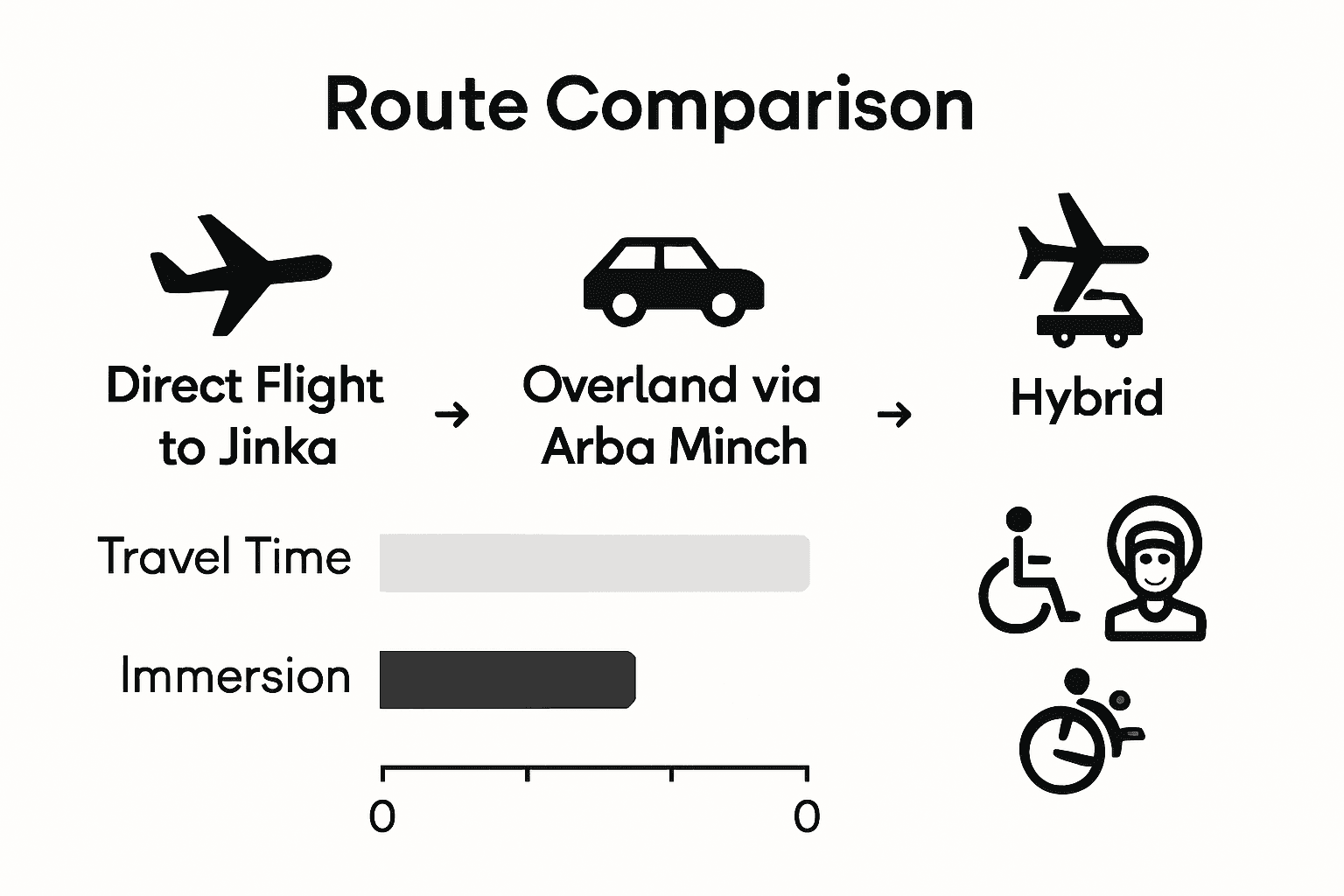
Your tour route should carefully consider transportation options and cultural considerations. Ethiopian Airlines provides convenient flights from Addis Ababa to Jinka, the primary gateway to the Omo Valley, making it easier to reach this remote destination. Alternatively, travelers seeking a more immersive experience might choose an overland journey through Arba Minch, which typically requires several days of travel but offers deeper interaction with the landscape and local communities.
Careful route selection means understanding seasonal variations. While the dry season presents the most straightforward travel conditions, the rainy months from June to September offer lush scenery and fewer tourist crowds. However, be prepared for potentially challenging road conditions that could limit access to more remote tribal areas.
Here is a comparison of travel routes to the Omo Valley:
| Route Type | Travel Duration | Immersion Level | Accessibility |
|---|---|---|---|
| Flight to Jinka | Few hours | Moderate, less scenic | Very high, convenient |
| Overland via Arba Minch | Several days | High, immersive | Moderate, more remote |
Pro tip: Research local festival dates like Timkat and Meskel to potentially align your travel with extraordinary cultural celebrations that provide unique insights into Ethiopian traditions.
Step 2: Arrange Travel Documents and Essentials
Preparing for an authentic cultural journey through the Omo Valley requires meticulous planning and comprehensive documentation. Your travel preparation begins with gathering essential paperwork and understanding the specific entry requirements for Ethiopia. Travelers will need a valid passport with at least six months remaining beyond their planned return date, along with a tourist visa that can be obtained online through the Ethiopia eVisa system.
Beyond standard travel documents, specialized preparation is crucial for the Omo Valley expedition. Consider securing comprehensive travel insurance that covers medical emergencies and potential evacuation scenarios in remote regions. Pack essential medical supplies including antimalarial medication, water purification tablets, and a basic first aid kit tailored to remote travel conditions. Recommended personal essentials include lightweight moisture-wicking clothing, sturdy hiking boots, high-SPF sunscreen, and multiple passport-sized photographs for potential local permits or unexpected documentation needs.
Organizing your travel documents demands strategic thinking. Create digital and physical copies of critical documents like your passport, visa, insurance information, and emergency contact details. Store digital copies securely in cloud storage and keep physical copies in separate locations from the originals. For travelers considering customizing their Ethiopian tour experience, advance communication with your tour operator can help streamline document requirements and provide region-specific guidance.
Below is a summary of essential document preparation tips:
| Preparation Step | Security Benefit | Recommended Method |
|---|---|---|
| Physical document copies | Backup if originals are lost | Store in separate location |
| Digital document copies | Access from anywhere | Secure cloud storage |
| Waterproof pouch usage | Protects from environment | Wear under clothing |
Pro tip: Invest in a waterproof, slash-resistant document pouch that can be worn under clothing to protect your critical travel documents in unpredictable environments.
Step 3: Connect With Local Culture and Guides
Successfully navigating the cultural landscape of the Omo Valley requires more than just physical travel skills. Your journey demands genuine human connection and respectful engagement with local communities. Local guides play a critical role in transforming your travel experience, serving as cultural interpreters who bridge understanding between visitors and indigenous tribes.
Authentic cultural connection begins with genuine curiosity and profound respect. Learn basic greetings in local languages, ask permission before taking photographs, and demonstrate genuine interest in tribal traditions. Tribal communities in the Omo Valley have complex social structures and deeply rooted cultural practices that require careful, nuanced interaction. Your local guide will help you understand appropriate behaviors, communication protocols, and meaningful ways to engage with community members without disrupting their traditional ways of life.
Prepare to approach cultural interactions with humility and openness. Cultural journeys are fundamentally about meaningful human connections, not simply observing exotic practices. Engage in conversations, participate in community activities when invited, and show genuine respect for local customs. Be prepared to listen more than you speak, and allow your local guides to facilitate deeper understanding of the intricate social dynamics within each tribal community.
Pro tip: Pack small, culturally appropriate gifts like school supplies or practical items that demonstrate respect and provide genuine value to the communities you visit, rather than bringing random souvenirs that might seem patronizing.
Step 4: Participate in Authentic Village Activities
Engaging with Omo Valley communities requires a thoughtful and respectful approach that goes beyond mere observation. Traveling in small groups creates more personal and culturally enriching interactions, allowing for meaningful connections with local tribal members and a deeper understanding of their way of life.
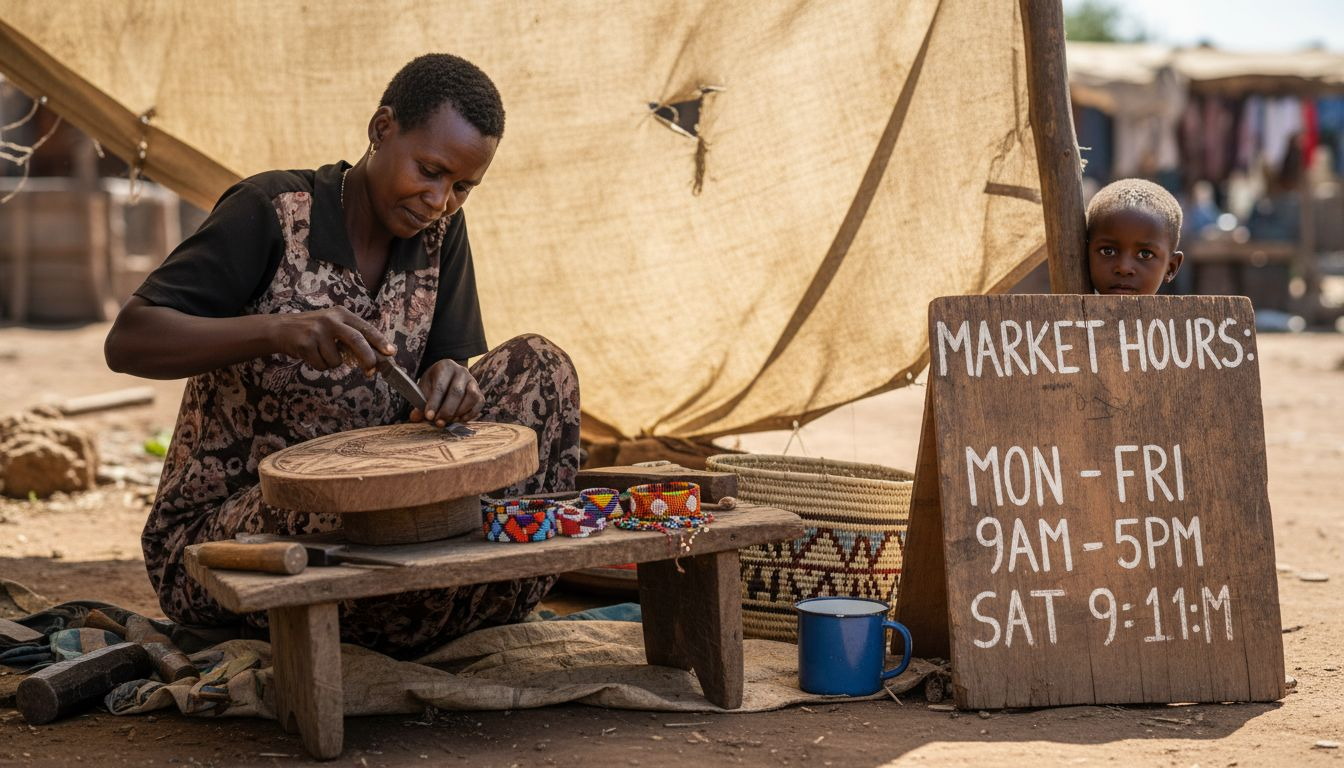
Authentic participation means actively engaging with community activities while maintaining cultural sensitivity. Seek opportunities to join traditional craft workshops, agricultural activities, or ceremonial preparations under the guidance of your local guide. This might involve learning traditional weaving techniques, participating in cooking demonstrations, or observing traditional skill workshops. Always ask for permission, follow your guide’s instructions, and approach each activity with genuine respect and curiosity.
Supporting local artisans is an important aspect of authentic cultural engagement. Look for opportunities to purchase locally made crafts that directly support community economies, such as beaded jewelry, handwoven textiles, or traditional pottery. These purchases not only provide economic support but also help preserve traditional craftsmanship and provide a meaningful connection to the community you are visiting. Be prepared to interact with artisans, learn about their techniques, and understand the cultural significance behind each handmade item.
Pro tip: Always carry local currency in small denominations to make purchases and show respect by negotiating prices gently and with a smile, understanding that each transaction is a cultural exchange.
Step 5: Respect Local Traditions and Verify Impact
Navigating cultural interactions in the Omo Valley requires a profound understanding of responsible tourism principles. Traveling in small groups creates a less intrusive presence and enables more meaningful community interactions, allowing for genuine cultural exchange without overwhelming local communities.
Respecting local traditions demands careful observation and deep cultural sensitivity. Before participating in any activity or taking photographs, always seek explicit permission from community elders and local guides. Understand that each tribal community has unique social protocols and unwritten rules that might not be immediately apparent to outside visitors. Pay attention to nonverbal cues, dress modestly, and follow your guide’s recommendations about appropriate behavior. Your goal is to learn and appreciate cultural practices without imposing external judgments or disrupting traditional ways of life.
Verifying your travel impact goes beyond passive observation. Research tour operators committed to ethical practices that prioritize community benefit and cultural preservation. Ask questions about how local communities are compensated, whether tours provide fair economic opportunities, and how traditional knowledge is protected. Supporting local economies through responsible purchasing of handmade crafts can be a meaningful way to contribute positively to community sustainability. Engage with transparency and humility, recognizing that cultural exchange is a privilege that requires mutual respect and understanding.
Pro tip: Request a brief cultural briefing from your tour guide before each community interaction to understand specific local customs and potential sensitivities that will help you navigate encounters with greater respect and awareness.
Embark on an Authentic Omo Valley Cultural Journey with Expert Guidance
Navigating the complex cultural landscape of the Omo Valley can feel overwhelming without the right support. From arranging travel documents to respectfully engaging with local tribes and participating in genuine village activities the challenges are real. Many travelers seek a way to ensure their experience is immersive yet responsible while gaining meaningful connections with indigenous communities.
Spectrum Ethiopia Tours understands these key pain points. With our expert local guides in Addis Ababa and a dedicated management team based in Switzerland, we specialize in fully customized, safe, and well-organized cultural tours tailored to your unique needs. Our South Omo Valley cultural journeys focus on respectful interaction, small group travel, and authentic experiences that go beyond surface-level tourism. We help you plan the ideal route and timing while ensuring awareness of local traditions and environmental factors.

Start your authentic Omo Valley adventure today with Spectrum Ethiopia Tours. Benefit from our commitment to responsible tourism and real human encounters on a journey you will never forget. Visit our website to explore how we craft personalized experiences that honor the rich cultural heritage of Ethiopia. Don’t miss your chance to discover Ethiopia’s beating heart through a truly transformative tour designed just for you.
Frequently Asked Questions
What is the best time to visit the Omo Valley for cultural experiences?
The optimal time for cultural tours in the Omo Valley is between October and March. Plan your trip during these months to enjoy warm weather and easier access to the region’s communities.
How do I prepare travel documents for my Omo Valley trip?
Ensure you have a valid passport with at least six months’ validity and obtain a tourist visa online. Create digital and physical copies of your essential documents to keep them secure throughout your journey.
What should I consider when choosing a travel route to the Omo Valley?
Decide between flying to Jinka for convenience or taking an overland journey via Arba Minch for a more immersive experience. Evaluate your comfort with travel duration and accessibility to remote communities when making your choice.
How can I connect respectfully with local cultures while visiting?
Engage local communities with genuine curiosity and respect by learning basic greetings and seeking permission before taking photos. Approach interactions with humility, and actively listen to understand their cultural significance.
What types of activities can I participate in with local communities?
Look for opportunities to join traditional workshops or community activities, such as crafting or cooking demonstrations. This hands-on approach enriches your experience and supports local artisans while respecting cultural customs.
How can I ensure my travel has a positive impact on local communities?
Research ethical tourism practices and choose tours that prioritize community benefits. Verify how local economies are supported and engage in meaningful cultural exchanges through respectful interactions and supporting local artisans.