
Travel photographers know that Ethiopia offers more World Heritage sites than any other Sub-Saharan African country, attracting everyone from Swiss adventurers to American explorers. For European creative minds, Ethiopia’s changing light, vibrant festivals, and ancient landscapes present both a challenge and an immense opportunity. If you are looking for proven strategies to capture authentic cultural experiences and elevate your storytelling, this guide delivers expert tips that address gear, planning, engagement, and editing tailored for Ethiopia’s extraordinary settings.
Table of Contents
- Step 1: Assess Camera Gear For Ethiopia’s Unique Locations
- Step 2: Plan Shot Lists For Cultural And Adventure Moments
- Step 3: Set Camera Settings For Lighting And Movement
- Step 4: Engage Locals For Authentic Photo Opportunities
- Step 5: Review And Edit Images For Maximum Impact
Quick Summary
| Key Insight | Explanation |
|---|---|
| 1. Choose Versatile Camera Gear | Opt for weather-sealed DSLRs or mirrorless cameras and multiple lenses for varied Ethiopian landscapes. |
| 2. Create a Flexible Shot List | Incorporate diverse categories like cultural events and landscapes while allowing space for spontaneity. |
| 3. Master Camera Settings | Adjust ISO, shutter speed, and aperture for varying light and movement conditions throughout Ethiopia. |
| 4. Engage Local Communities | Connect genuinely with locals for authentic images and cultural exchanges before photographing them. |
| 5. Edit Thoughtfully for Storytelling | Select and enhance images to communicate vibrant narratives while preserving the authenticity of Ethiopia’s scenes. |
Step 1: Assess Camera Gear for Ethiopia’s Unique Locations
Selecting the right camera equipment is crucial when preparing for photography tours across Ethiopia’s diverse landscapes and cultural sites. Professional photographers understand that this region demands versatile and robust gear capable of capturing everything from historic rock-hewn churches to expansive mountain terrains.
When planning your photography kit, prioritize equipment that can handle Ethiopia’s varied environments. Photographers capturing World Heritage sites require specialized lenses and sturdy tripods designed to manage challenging terrain and unpredictable lighting conditions. Consider packing a robust DSLR or mirrorless camera with weather-sealed body, multiple lenses ranging from wide-angle to telephoto, and a lightweight yet stable tripod for capturing sharp images in low light.
Your lens selection should include versatile options such as a 24-70mm f/2.8 for landscape shots and a 70-200mm f/4 for wildlife and detailed cultural photography. Protect your gear with dust-resistant bags and multiple memory cards to ensure you do not miss capturing Ethiopia’s extraordinary moments.
Pro Tip: Pack silica gel packets in your camera bag to absorb moisture and protect sensitive electronics during temperature and humidity transitions across Ethiopia’s diverse regions.
Here’s a quick comparison of key camera gear features for Ethiopian photography:
| Equipment Type | Essential Feature | Why It Matters in Ethiopia |
|---|---|---|
| DSLR/Mirrorless | Weather-sealed body | Protects electronics from dust/rain |
| Wide-Angle Lens | 24-70mm range, f/2.8 aperture | Versatile for landscapes and sites |
| Telephoto Lens | 70-200mm, f/4 or wider aperture | Captures distant wildlife and rituals |
| Tripod | Lightweight, stable, compact | Useful for travel and low-light shots |
| Memory Storage | Multiple high-capacity cards | Prevents lost moments, backup safety |
Step 2: Plan Shot Lists for Cultural and Adventure Moments
Creating a comprehensive shot list is essential for photographers looking to capture the rich tapestry of Ethiopian experiences. Your photography plan should balance spontaneity with strategic preparation, ensuring you document both the planned and unexpected moments that make this destination extraordinary.
Documenting tourism experiences requires a multifaceted approach that covers cultural events, daily life, and natural landscapes. Design your shot list to include diverse categories such as traditional ceremonies, local market scenes, architectural details, wildlife encounters, and landscape panoramas. Research specific regions like Gondar and Harar in advance, identifying unique cultural events and natural backdrops that offer compelling photographic opportunities.
Prioritize versatility in your shot planning by creating flexible sections in your list. Allocate space for candid portraits, architectural studies, cultural rituals, and adventure moments like hiking in the Simien Mountains. Consider time of day, lighting conditions, and potential cultural sensitivities when framing your potential shots. Always seek permission before photographing individuals and respect local customs throughout your visual storytelling.
Pro Tip: Create a digital backup of your shot list on a cloud service and carry a printed version to ensure you have a reference even if electronic devices fail.
Step 3: Set Camera Settings for Lighting and Movement
Mastering camera settings is critical for capturing Ethiopia’s dynamic and diverse photographic landscapes. Understanding how to adapt your technical approach will transform your travel photography from good to extraordinary.
Photography resources emphasize technical adaptability in challenging environments like Ethiopia. Your camera settings must accommodate rapid shifts between bright highland sunlight and dim church interiors. Start by selecting a flexible ISO range between 200 and 1600, allowing quick adjustments for varying light conditions. For action scenes, use shutter speeds of at least 1/500 second to freeze movement during cultural ceremonies or wildlife encounters. In low light situations, open your aperture to f/2.8 or wider to maximize available light while maintaining image clarity.
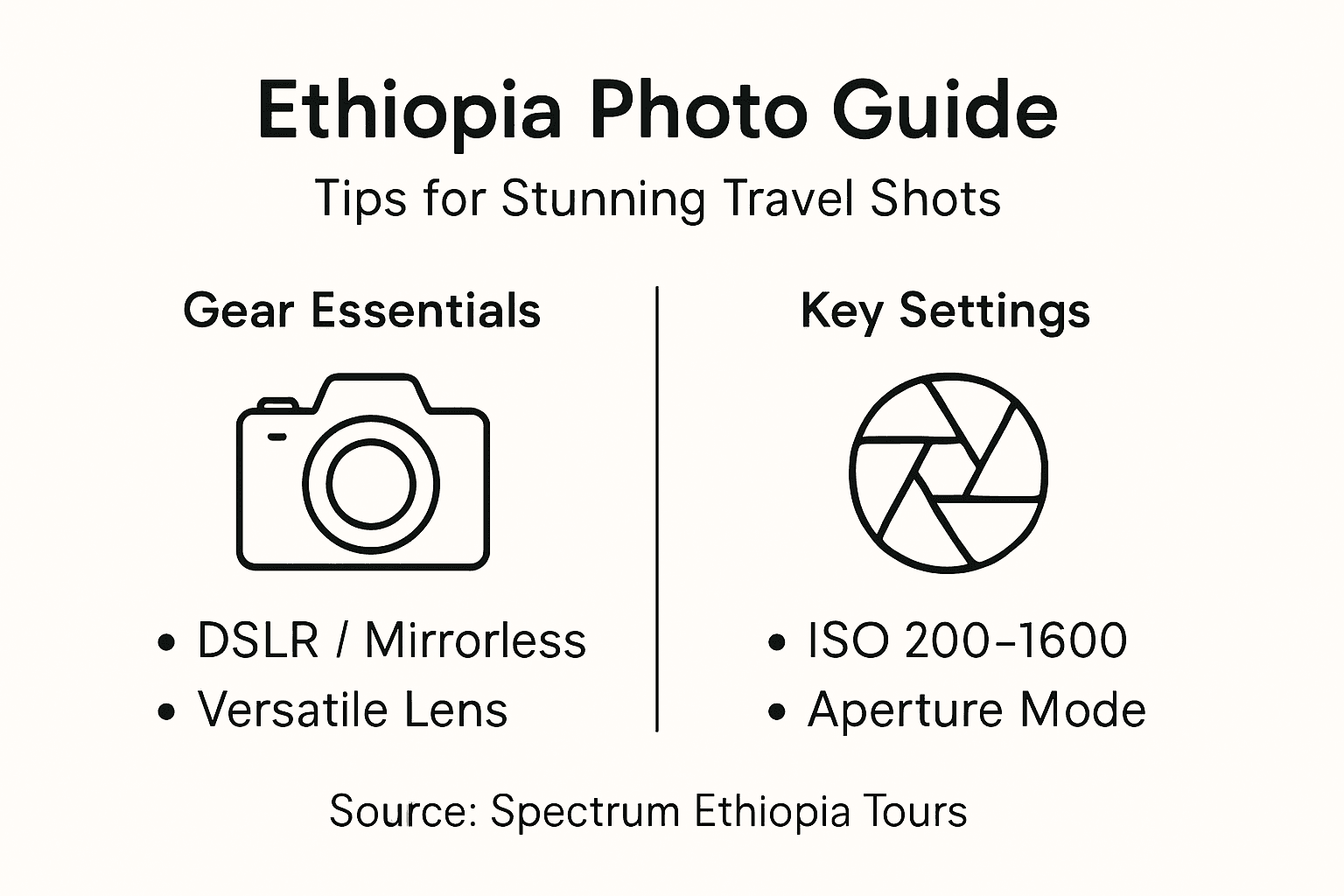
Practice switching between manual and aperture priority modes to give yourself maximum creative control. When photographing moving subjects like traditional dancers or wildlife, use continuous autofocus and select dynamic area focus modes that track subject movement. White balance becomes crucial in Ethiopia’s varied lighting environments, so experiment with preset and custom white balance settings to capture authentic color temperatures across different scenes.
Pro Tip: Carry extra batteries and a lens cleaning kit, as temperature and dust variations in Ethiopia can significantly impact electronic performance and image quality.
This table summarizes Ethiopia’s main photography environments and recommended camera settings:
| Setting | Lighting Challenge | Recommended Mode | Key Adjustment |
|---|---|---|---|
| Church Interiors | Dim, uneven lighting | Aperture Priority | Use ISO 800-1600, f/2.8 |
| Highland Landscapes | Bright, harsh sun | Manual or Aperture | Lower ISO, f/8, WB to Daylight |
| Cultural Ceremonies | Fast movement, mixed | Shutter Priority | 1/500s or faster, ISO 400 |
| Markets/Street Scenes | Changing conditions | Manual | Auto WB, ISO 200-800 |
Step 4: Engage Locals for Authentic Photo Opportunities
Capturing genuine photographic moments in Ethiopia requires more than technical skill. Your ability to connect meaningfully with local communities will determine the depth and authenticity of your visual storytelling.
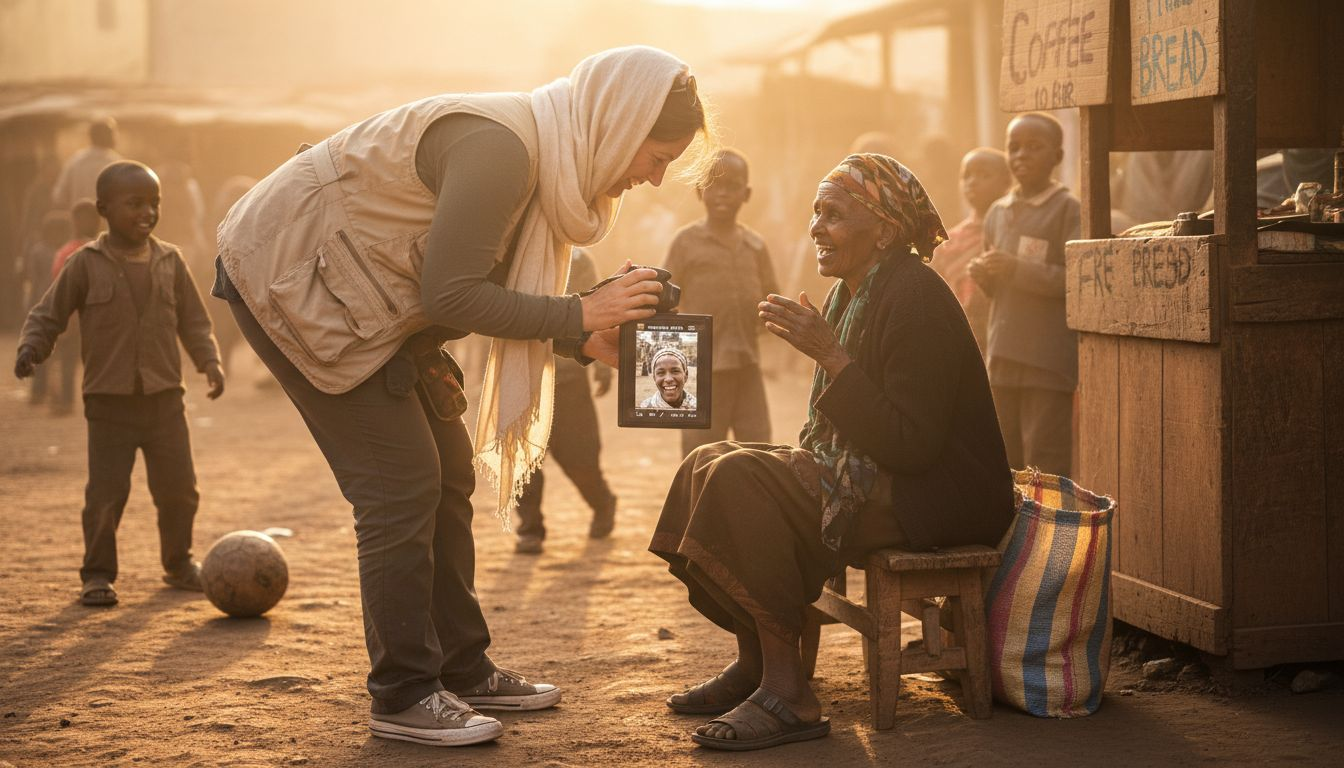
Photography exhibitions showcase community collaboration as the cornerstone of meaningful cultural documentation. Begin by learning basic greetings in local languages like Amharic or Oromo, which demonstrates respect and opens doors for genuine interactions. Always ask permission before photographing individuals, using gentle gestures and a warm smile to communicate your intent. Offer to show subjects their images on your camera display, which often creates instant rapport and transforms potential subjects from strangers to willing collaborators.
Approach each photographic encounter as a cultural exchange rather than a transactional interaction. Spend time listening to local stories, understanding context, and showing genuine interest in people beyond their photographic potential. In markets, workshops, and community spaces, engage in conversation before raising your camera. Consider bringing small prints or digital copies to share from previous interactions as a gesture of goodwill. This approach not only produces more authentic images but also fosters meaningful cross cultural connections that transcend traditional tourist photographer dynamics.
Pro Tip: Carry a small translation book or smartphone translation app to help bridge communication gaps and show genuine respect for local languages.
Step 5: Review and Edit Images for Maximum Impact
The art of transforming good photographs into extraordinary visual narratives happens during post processing. Your editing workflow will determine how effectively you communicate the rich stories of Ethiopian landscapes and cultural experiences.
Educational photography resources emphasize storytelling techniques that turn raw images into compelling visual narratives. Begin your editing process by ruthlessly culling images that do not meet technical or storytelling standards. Focus on selecting photographs that capture genuine emotion, unique moments, and authentic cultural details. Use editing software like Adobe Lightroom to adjust exposure, correct white balance, and enhance color vibrancy while maintaining the natural essence of Ethiopian scenes. Pay special attention to preserving the authenticity of lighting and skin tones when working with portraits from different ethnic regions.
Adopt a subtle editing approach that highlights the inherent beauty of your Ethiopian photography without over manipulating the images. Crop strategically to improve composition, remove distracting elements, and draw viewer attention to the most compelling aspects of each scene. Develop a consistent editing style that reflects the rich color palette and dramatic lighting of Ethiopia while ensuring each image tells a unique story. Consider creating a preset that captures the warmth and depth of Ethiopian landscapes to streamline your editing workflow and maintain visual consistency across your travel photography collection.
Pro Tip: Create backup copies of your original RAW files before beginning any editing to protect your original photographic data.
Capture Ethiopia’s Essence with Expert Guidance and Authentic Experiences
Navigating the unique lighting, diverse cultural moments, and challenging terrains of Ethiopia can be overwhelming for photographers determined to create stunning travel shots. The article highlights the importance of understanding camera gear, local engagement, and precise planning to overcome these challenges and seize authentic images. If your goal is to move beyond typical tourist photos and truly tell the story of Ethiopia through your lens, you need more than tips – you need immersive experiences that bring these photographic opportunities to life.

Discover how Spectrum Ethiopia Tours transforms your photography journey with expertly crafted tours focused on real human encounters and breathtaking landscapes. From the cultural richness of the South Omo Valley to the dramatic scenes of the Danakil Depression and the Northern Historic Route, each itinerary is designed with your creative vision in mind. Benefit from knowledgeable local guides in Addis Ababa who help you engage respectfully with communities and unlock unique photo moments while you focus on perfecting your craft. Explore the possibilities with our customized tours and make your dream of capturing Ethiopia’s true spirit a stunning reality today.
Frequently Asked Questions
What equipment do I need for photography tours in Ethiopia?
To effectively capture the stunning landscape and culture, bring a weather-sealed DSLR or mirrorless camera, a wide-angle lens (24-70mm f/2.8), a telephoto lens (70-200mm f/4), and a lightweight tripod. Ensure your gear is protected with dust-resistant bags and have multiple memory cards ready for your shoots.
How should I plan my shot list for Ethiopian photography?
Create a shot list that includes cultural events, local market scenes, and natural landscapes. Include flexible sections for candid portraits and action shots, and research specific regions to identify unique opportunities, ensuring you capture both planned and spontaneous moments.
What are the best camera settings for diverse lighting conditions in Ethiopia?
Set your ISO between 200 and 1600 depending on lighting conditions. Use aperture priority mode for dim interiors, and shutter priority for fast-moving cultural events, adjusting as needed for clarity and detail in your photos.
How can I engage with local communities for better photo opportunities?
Approach locals respectfully, learn basic greetings, and always ask for permission before photographing individuals. Spend time listening to their stories and consider showing them their images afterward to build rapport and create a meaningful exchange.
What steps should I follow for editing my travel photos from Ethiopia?
Start by selecting images that capture genuine emotion and storytelling elements, then use editing software to adjust exposure and white balance while preserving natural colors. A subtle editing approach is best; aim for consistency by developing a preset that highlights the unique beauty of Ethiopian landscapes.
Recommended
- Ethiopia Travel Guide & Pre-Departure Tips | Ethiopia Tours
- Why Visit Ethiopia: Complete Guide for Travelers – Spectrum Ethiopia Tours
- Solo Travel Guide Ethiopia: Plan Safe and Memorable Trips – Spectrum Ethiopia Tours
- 7 Key Benefits of Guided Tours in Ethiopia Explained Clearly – Spectrum Ethiopia Tours