
Most adventure-seekers from Switzerland crave travel experiences that go far deeper than typical American tourist routes, and Ethiopia delivers exactly that. With over 80 distinct ethnic groups and vibrant traditions, this East African country offers unmatched cultural immersion for those ready to step off the beaten path. Discover how to align your travel ambitions, select meaningful destinations, and plan for truly personal exploration while benefiting from expert local guidance every step of the way.
Table of Contents
- Step 1: Define Your Travel Goals And Preferences
- Step 2: Research Must-See Destinations And Events
- Step 3: Select Ideal Routes And Travel Timing
- Step 4: Plan Daily Activities With Local Guides
- Step 5: Verify Logistics And Finalize Your Itinerary
Quick Summary
| Key Insight | Explanation |
|---|---|
| 1. Define Your Travel Goals | Assess your interests and physical abilities to tailor your Ethiopian adventure itinerary. |
| 2. Research Key Destinations | Identify must-see sites and events, noting their unique features and best visiting seasons. |
| 3. Plan Efficient Routes | Map out logical connections between destinations to maximize cultural exposure and minimize travel time. |
| 4. Collaborate With Local Guides | Engage local guides for personalized experiences and deeper cultural insights during your travels. |
| 5. Verify Logistics Thoroughly | Confirm all travel arrangements and remain flexible to adapt to unforeseen challenges in your itinerary. |
Step 1: Define your travel goals and preferences
Determining your adventure goals is the foundational step in creating a memorable Ethiopian expedition. Understanding your personal travel motivations allows you to craft an itinerary that matches your unique interests and energy levels. Are you seeking heart-racing experiences through rugged landscapes? Craving deep cultural immersion with indigenous communities? Or hoping for a balanced journey that blends relaxation with exploration?
Start by honestly assessing your physical capabilities, comfort zones, and adventure thresholds. Consider factors like altitude tolerance, hiking endurance, willingness to experience basic accommodations, and openness to unfamiliar cultural practices. Some travelers prefer challenging treks through the Simien Mountains, while others might want gentler cultural tours in the Omo Valley. Your personal preferences will shape every aspect of the trip, from transportation modes to daily activity intensity.
Professional Tip: Create a ranked list of your top three travel priorities before designing your itinerary to ensure your Ethiopian adventure matches your deepest travel desires.
Step 2: Research must-see destinations and events
Researching must-see destinations is crucial for crafting an unforgettable Ethiopian adventure. Selecting key locations requires studying the incredible diversity of landscapes and cultural highlights unique to this remarkable country. Your research should focus on identifying extraordinary experiences that showcase Ethiopia’s rich cultural tapestry and stunning natural environments.
Start by exploring iconic destinations like the Simien Mountains National Park, the rock-hewn churches of Lalibela, the historic sites of Axum, and the remote tribal regions of the Omo Valley. Consider timing your visit to coincide with significant cultural events such as Timket (Epiphany) festival, Meskel (Finding of the True Cross) celebration, or regional cultural ceremonies. Pay attention to seasonal variations that might impact travel accessibility, particularly in remote mountainous or desert regions.
Here is a summary of Ethiopian destinations and their unique travel features:
| Destination | Main Attraction | Ideal Travel Season | Notable Experience |
|---|---|---|---|
| Simien Mountains National Park | Dramatic mountain scenery | October to March | Trekking, wildlife viewing |
| Lalibela | Ancient rock-hewn churches | October to March | Religious heritage exploration |
| Axum | Historical archeological sites | October to March | Ancient ruins, stelae |
| Omo Valley | Tribal cultural encounters | October to March | Indigenous ceremonies |
| Addis Ababa | Museums, city life | Year-round | Cultural museums, local markets |
Professional Tip: Create a digital spreadsheet to track potential destinations, noting specific details like best visiting seasons, required permits, and unique cultural experiences to help streamline your trip planning process.
Step 3: Select ideal routes and travel timing
Mapping a logical geographical progression between destinations is crucial for maximizing your Ethiopian adventure while minimizing unnecessary travel time. Your route should create a smooth, efficient journey that connects your chosen destinations with minimal backtracking and maximum cultural exposure. Consider starting in Addis Ababa and developing a circular or linear route that strategically links historical sites, national parks, and cultural regions based on their proximity and accessibility.
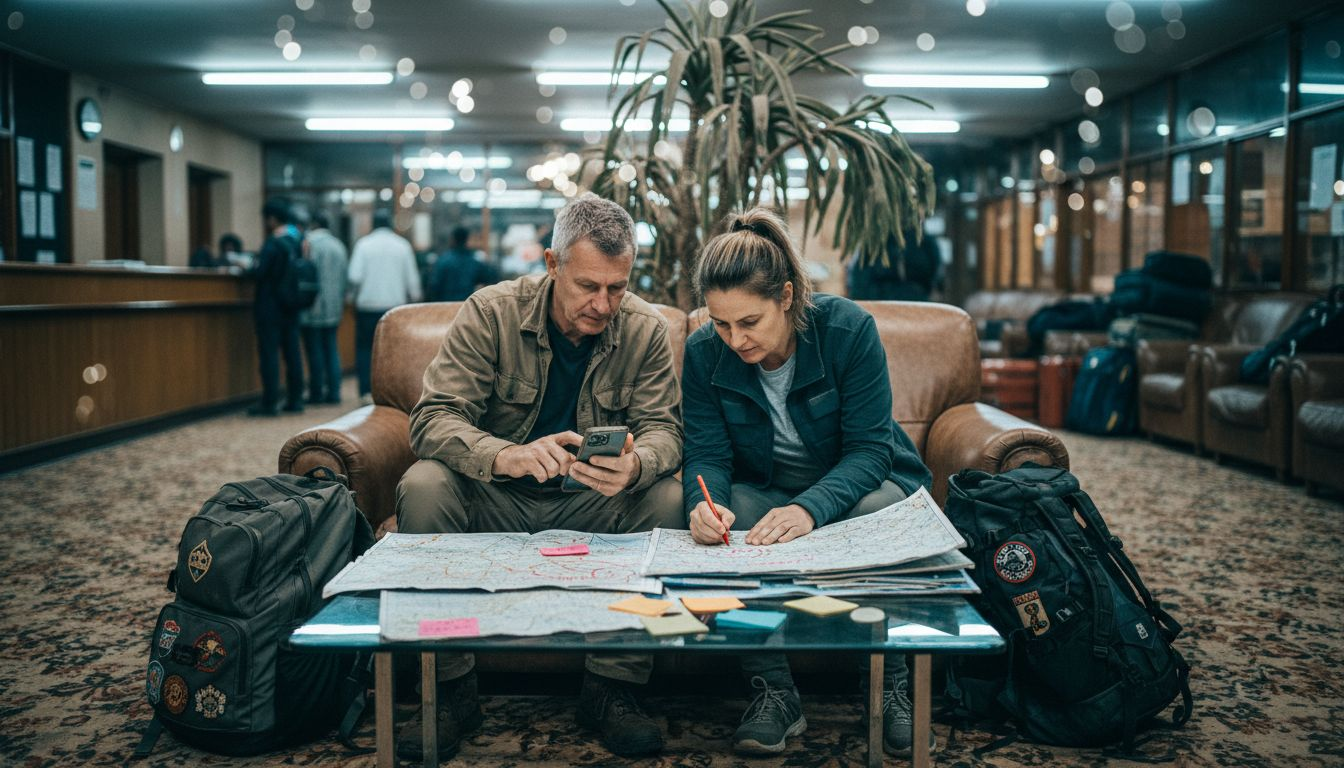
Timing is everything when planning your Ethiopian expedition. The prime travel window spans from October to March, offering comfortable temperatures and optimal conditions for outdoor exploration. During these months, you will encounter dry weather that makes mountain trekking, wildlife viewing, and cultural encounters much more enjoyable. Avoid the rainy season between June and September, when many rural roads become challenging to navigate and some remote areas might be inaccessible.
Professional Tip: Use digital mapping tools to visualize potential routes and calculate realistic travel times between destinations, accounting for road conditions and local transportation options.
Step 4: Plan daily activities with local guides
Integrating local guides into your daily itinerary planning transforms an ordinary trip into an extraordinary cultural experience. Local guides are your gateway to understanding the nuanced landscape of Ethiopia providing insider knowledge that goes far beyond standard tourist information. They can help you navigate complex cultural interactions, recommend authentic experiences, and ensure you approach each destination with respect and genuine curiosity.
When collaborating with local guides, discuss your interests, physical capabilities, and travel goals in detail. These experts can recommend optimal visit times for specific sites, suggest hidden cultural experiences, and provide realistic assessments of activity difficulty. For example, a guide might recommend an alternative hiking route in the Simien Mountains that matches your fitness level or suggest a less crowded time to visit rock hewn churches in Lalibela that allows for more meaningful exploration.
The table below compares guided versus self-guided travel for each planning step:
| Planning Step | With Local Guides | Self-Guided Approach |
|---|---|---|
| Activity Planning | Tailored suggestions, insider tips | Personal research, limited insights |
| Cultural Immersion | Enhanced with local perspective | May miss subtle customs |
| Logistics | Easier navigation, problem-solving help | Must manage all logistics alone |
| Safety & Adaptation | Guide monitors risks, recommends changes | Must assess and adapt independently |
Professional Tip: Schedule an initial consultation with your local guide before finalizing your itinerary to create a personalized travel plan that balances adventure, cultural immersion, and personal comfort.
Step 5: Verify logistics and finalize your itinerary
Conducting a thorough itinerary review is your final critical checkpoint before embarking on your Ethiopian adventure. This stage involves meticulously confirming all travel arrangements, ensuring every logistical detail aligns with your planned experience. Verify transportation connections between destinations, cross check accommodation bookings, confirm guide availability, and validate entry requirements for different regions you will traverse.
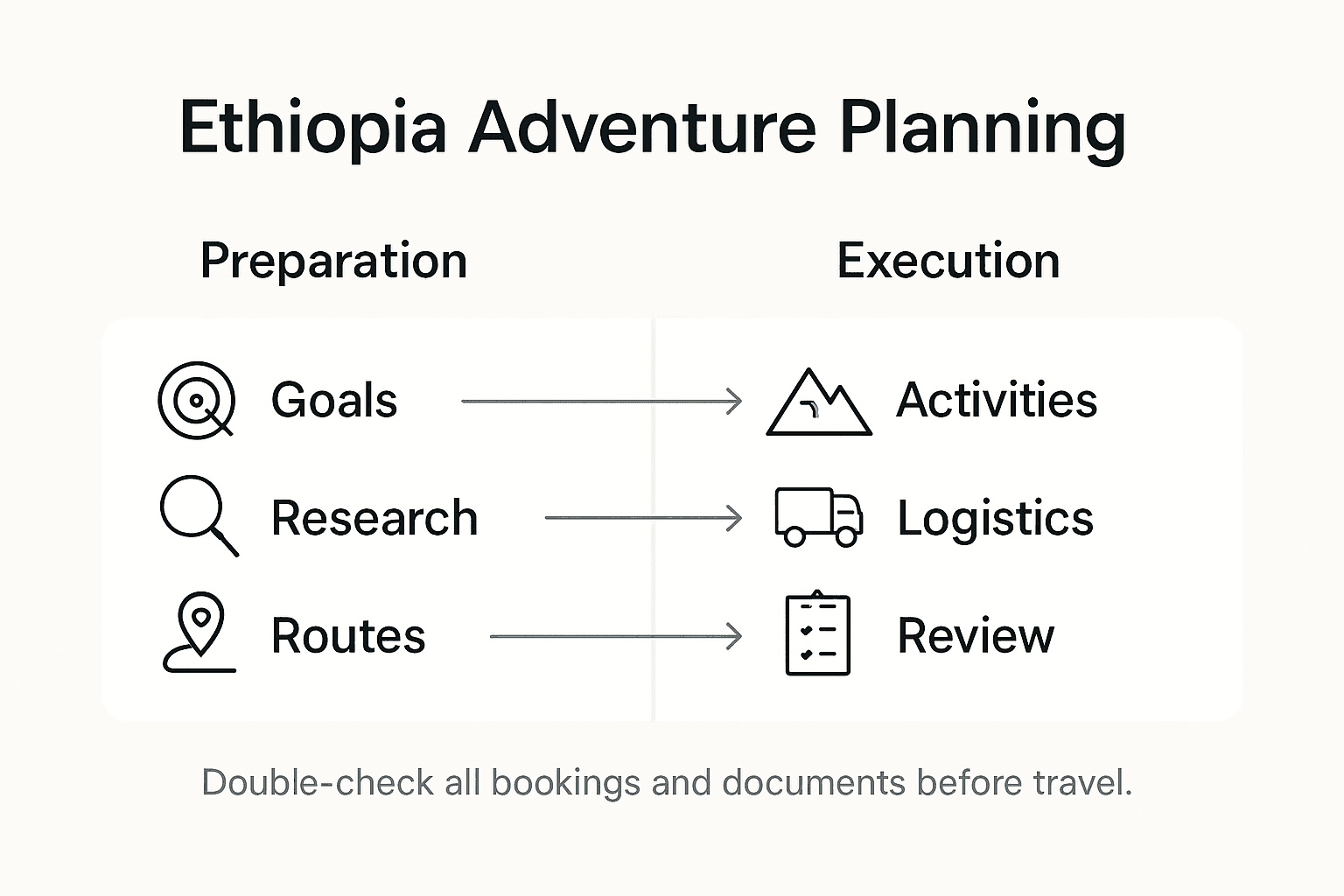
Pay special attention to potential seasonal variations that might impact your travel. Test logistical assumptions by mapping out daily travel distances, estimating realistic transit times, and building flexibility into your schedule. Consider potential challenges like remote road conditions in the Omo Valley or mountain passes in the Simien Mountains. Your goal is creating a resilient itinerary that can adapt to unexpected circumstances while maintaining the core essence of your planned adventure.
Professional Tip: Create a digital backup of all critical documents including passport scans, travel insurance details, and emergency contact information in a secure cloud storage platform accessible from multiple devices.
Turn Your Ethiopian Itinerary into an Unforgettable Adventure
Creating a customized itinerary for your Ethiopian adventure can feel overwhelming with so many incredible destinations, cultural nuances, and logistical details to consider. This article highlights common traveler challenges such as balancing physical capabilities with desired experiences, choosing the right travel timing, and integrating authentic cultural encounters through local guides. If you want to transform these planning hurdles into a seamless and rewarding journey Spectrum Ethiopia Tours offers expert guidance and fully customized itineraries tailored to your unique goals.

Discover authentic cultural, historical, and adventure experiences with trusted local guides based in Addis Ababa who ensure your journey through the South Omo Valley, Danakil Depression, or Northern Historic Route is not only safe but deeply immersive. Don’t let the complexity of Ethiopian travel logistics hold you back from creating the adventure you crave. Visit Spectrum Ethiopia Tours to start planning your dream trip today and experience firsthand how professional support can turn your itinerary into a once-in-a-lifetime adventure.
Frequently Asked Questions
How do I define my travel goals for an adventure tour in Ethiopia?
To define your travel goals, assess your interests, physical capabilities, and tolerance for different cultural experiences. Create a ranked list of your top travel priorities, focusing on whether you want thrill-seeking adventures, cultural immersion, or a balanced experience.
What are the key destinations I should research for an Ethiopian adventure tour?
Key destinations include the Simien Mountains National Park, the rock-hewn churches of Lalibela, the historical sites of Axum, and the tribal regions of the Omo Valley. Identify which locations align with your interests and consider significant cultural events that may enhance your experience.
How can I select ideal routes and travel timing for my itinerary in Ethiopia?
To select routes, map out a logical progression between destinations, ideally starting from Addis Ababa. Plan your travel during the prime season from October to March, when conditions are best for outdoor exploration, and avoid the rainy season when access may be limited.
How do I incorporate local guides into my daily itinerary planning?
Integrate local guides by consulting with them about your interests and physical capabilities. They will offer tailored recommendations for activities and cultural experiences that align with your travel goals and ensure a more enriching journey.
What logistical details should I verify before finalizing my itinerary for Ethiopia?
Confirm all transportation connections between destinations, check accommodation bookings, and validate guide availability. Also, ensure you consider and account for seasonal variations that may impact your plans, such as road conditions and accessibility.
How can I create a backup plan for my travel documents while in Ethiopia?
Create a digital backup of all important documents, including passport scans and travel insurance. Store these in a secure cloud platform that you can access from multiple devices, ensuring you have all critical information handy in case of emergencies.