
Traveling from Switzerland to explore Ethiopia’s vibrant cultures promises adventure, but more than 60 percent of international travelers report confusion over entry permits and local regulations. For Swiss enthusiasts eager for unique cultural tours, understanding the official requirements is the key to confident, responsible discovery. With rules and processes differing from american and European counterparts, this guide helps you avoid costly missteps while creating memories that respect both Ethiopia’s heritage and legal expectations.
Table of Contents
- Definition Of Permits For Ethiopia Tours
- Types Of Permits Needed For Travelers
- Application Procedures And Key Requirements
- Legal Responsibilities For Travelers And Guides
- Risks Of Non-Compliance And Common Mistakes
Key Takeaways
| Point | Details |
|---|---|
| Understanding Permits is Crucial | Travelers need to be aware of various permit types needed for travel in Ethiopia, including tourist, business, and research visas. |
| Application Procedures Matter | Utilizing the e-Visa platform simplifies the application process, but travelers must ensure their passports and documents are in order. |
| Legal Compliance is Essential | Maintaining adherence to local laws and visa conditions is critical to avoid severe penalties such as fines and deportation. |
| Plan Ahead for Smooth Travel | Travelers are advised to verify permit requirements well in advance of their trip to ensure compliance with immigration regulations. |
Definition of Permits for Ethiopia Tours
A permit for Ethiopia tours represents an official authorization document required for legal entry and travel within the country’s borders. These legal documents serve as crucial validation for tourists, ensuring compliance with national immigration regulations and providing structured access to specific regions and experiences. Visa policies in Ethiopia outline comprehensive guidelines for international travelers seeking entry.
Travel permits in Ethiopia typically encompass multiple categories, including tourism visas, regional access permits, and specialized documentation for specific activities like photography, research, or cultural interactions. Most international visitors must secure either a visa on arrival or obtain an electronic visa before traveling. For Swiss travelers planning cultural expeditions, understanding these permit requirements becomes essential for smooth, legally compliant travel experiences.
The primary types of travel permits for Ethiopia include tourist visas, which can be obtained through three primary mechanisms: visa on arrival, electronic visa, and pre-approved visa from Ethiopian diplomatic missions. Ethiopia visa regulations specifically outline that tourist visas are typically valid for 30 to 90 days, depending on the traveler’s specific circumstances and planned itinerary. These permits not only grant legal entry but also provide a structured framework for responsible tourism.
Pro Tip: Always verify your specific permit requirements at least 4-6 weeks before your planned travel dates, as immigration policies can change rapidly and without extensive public notification.
Types of Permits Needed for Travelers
Travelers to Ethiopia must navigate a complex landscape of permit requirements, with each visa type serving a specific purpose and legal function. Visa policies for international travelers demonstrate that the Ethiopian government categorizes travel authorizations into distinct classifications designed to regulate entry and activities for foreign visitors.
The primary permit categories for travelers include tourist visas, which are most relevant for Swiss travelers planning cultural expeditions. Ethiopia visa types distinguish between several critical permit classifications:
- Tourist Visa: Designed for leisure and cultural exploration
- Business Visa: For commercial and professional activities
- Transit Visa: For travelers passing through Ethiopia to another destination
- Research Visa: For academic or scientific purposes
- Media/Journalist Visa: Specialized permit for professional media representatives
Each permit type carries specific documentation requirements, duration limitations, and entry conditions. Tourist visas typically allow stays between 30 to 90 days, with options for single or multiple entries depending on the traveler’s specific needs and planned itinerary. Swiss travelers must carefully match their travel purpose with the appropriate permit category to ensure seamless entry and legal compliance.
Here is a summary of the main Ethiopian travel permit types and who should use each:
| Permit Type | Ideal Traveler | Validity Period | Unique Requirements |
|---|---|---|---|
| Tourist Visa | Leisure travelers | 30-90 days | Advance or on-arrival application |
| Business Visa | Professionals | Varies by case | Official invitation letter needed |
| Transit Visa | Connecting visitors | Up to 3 days | Confirmed onward travel required |
| Research Visa | Academics/Scientists | Depends on project | Approval from research authority |
| Media/Journalist Visa | Journalists/Media Crew | Duration of assignment | Media accreditation documentation |
Pro Tip: Contact the Ethiopian Embassy in Switzerland at least eight weeks before your trip to confirm the most current permit requirements and processing timelines for your specific travel purpose.
Application Procedures and Key Requirements
For Swiss travelers planning an Ethiopian tour, understanding the visa application process is crucial for a smooth travel experience. Ethiopia’s e-Visa platform offers a streamlined online application system that simplifies the permit acquisition process for international visitors. The digital application method eliminates many traditional bureaucratic hurdles, allowing travelers to complete most requirements from the comfort of their home.
The comprehensive application procedure for Ethiopian travel permits involves several critical steps:
- Passport Preparation
- Ensure passport validity for at least six months beyond intended stay
- Have digital passport copy ready for upload
- Prepare high-resolution personal photograph meeting specific requirements
- Online Application Process
- Complete the online visa application form with accurate personal information
- Upload required supporting documents
- Pay the appropriate visa fee through secure online payment systems
- Select appropriate visa type (tourist, business, research)
Typically, processing times for Ethiopian travel permits range from one to three business days, with electronic visas being approved relatively quickly. Swiss travelers should anticipate potential variations in processing times and plan accordingly. Most tourist visas are valid for 30 to 90 days, providing flexibility for comprehensive travel experiences across Ethiopia’s diverse landscapes and cultural regions.
Pro Tip: Scan and digitize all critical travel documents at least two weeks before starting your online visa application to expedite the process and minimize last-minute complications.
Legal Responsibilities for Travelers and Guides
Travelers and tour guides in Ethiopia share complex legal responsibilities that ensure safe and respectful international tourism experiences. Government travel guidelines mandate strict compliance with national regulations, emphasizing the importance of understanding and adhering to local legal frameworks throughout the journey.
For travelers, critical legal responsibilities include:
- Carrying valid travel documentation at all times
- Strictly following visa conditions
- Avoiding unauthorized employment
- Respecting local cultural and legal norms
- Maintaining appropriate behavioral standards in public spaces
Tour guides play an equally crucial role in maintaining legal compliance. The Ethiopian Tourist Guides Professional Association requires licensed guides to fulfill multiple professional and legal obligations. These include ensuring tourist safety, supporting legal travel protocols, and serving as intermediaries between travelers and local regulations. Professional guides must be thoroughly trained in both tourism expertise and legal requirements, helping travelers navigate complex cultural and regulatory landscapes.
The consequences of legal non-compliance can be severe, potentially resulting in significant penalties such as fines, immediate deportation, or legal prosecution. Swiss travelers must recognize that ignorance of local laws does not exempt them from accountability. Tour operators and individual guides are legally obligated to provide clear information about regulatory expectations, creating a collaborative environment that prioritizes lawful and respectful travel experiences.
Pro Tip: Request a comprehensive legal briefing from your tour guide during the initial tour orientation to fully understand local regulations and potential cultural sensitivities.
Risks of Non-Compliance and Common Mistakes
International travelers face significant legal challenges when navigating Ethiopia’s complex regulatory landscape. US government travel advisories highlight multiple critical risks that can dramatically impact a traveler’s experience and legal standing.
Common mistakes that Swiss travelers frequently encounter include:
- Accidentally overstaying visa duration
- Failing to track precise visa expiration dates
- Traveling to restricted zones without proper authorization
- Neglecting passport validity requirements
- Attempting unauthorized employment
- Misunderstanding specific visa type restrictions
Government travel guidelines outline severe potential consequences for non-compliance. These penalties can range from substantial financial fines to potential detention and deportation. Swiss travelers must recognize that ignorance of local regulations does not provide legal protection. Unauthorized activities or regulatory violations can result in immediate legal action, potentially compromising future travel opportunities and creating significant personal and financial complications.
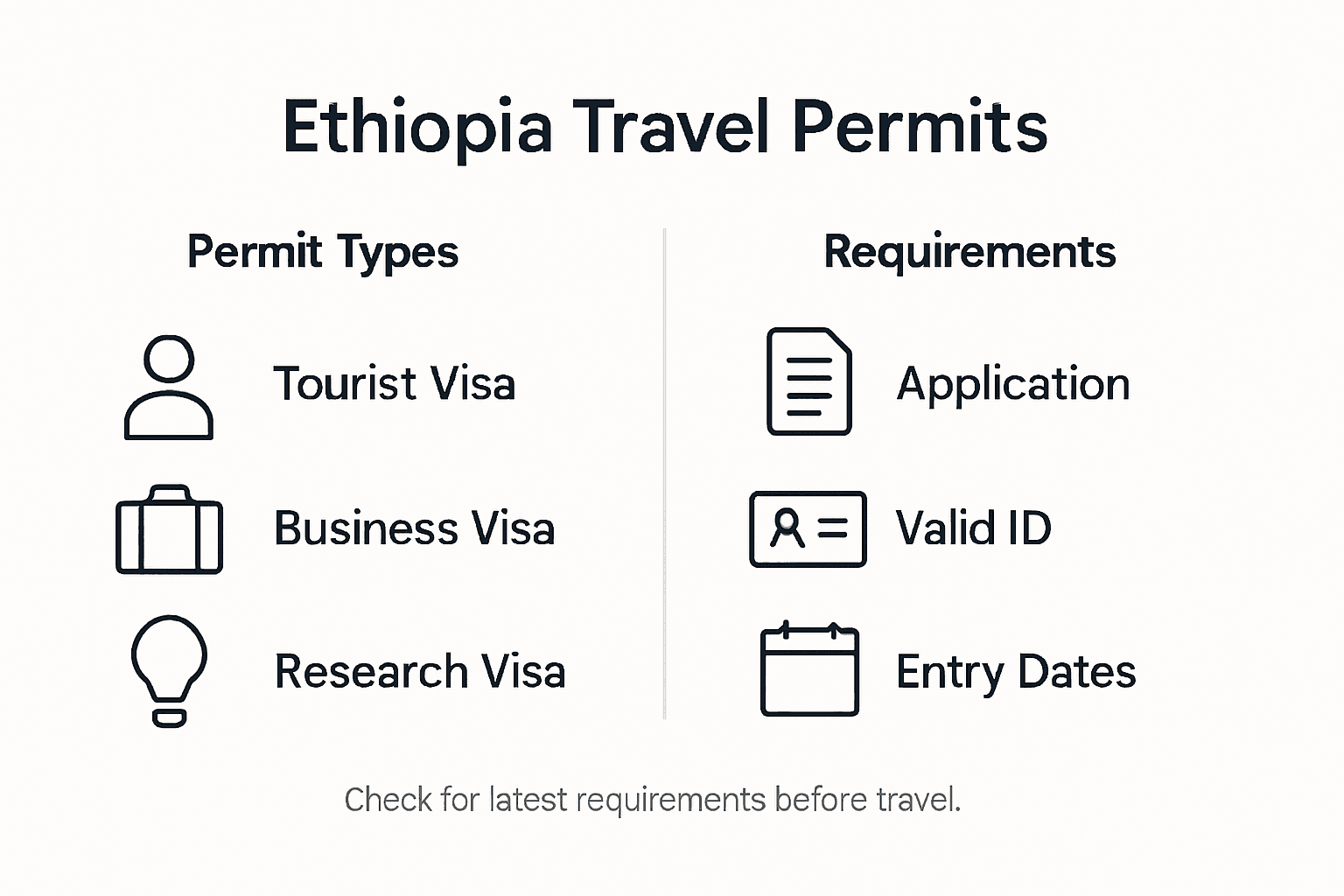
This table highlights the common risks and penalties Swiss travelers may face for non-compliance with Ethiopia’s permit rules:
| Violation Type | Common Consequence | Impact on Traveler |
|---|---|---|
| Overstaying visa | Financial fines/deportation | Barred from future entry |
| Incorrect permit usage | Legal prosecution and detention | Loss of travel privileges |
| Unauthorized employment | Immediate deportation | Criminal record risk |
| Invalid documents | Entry refusal | Full travel disruption |
Specifically for Swiss nationals, understanding the nuanced legal requirements becomes paramount. Each visa type carries unique restrictions and expectations, making comprehensive pre-trip research and consultation with official sources essential. Tour operators and professional guides play a crucial role in helping travelers navigate these complex regulatory environments, providing critical guidance to prevent inadvertent legal infractions.
Pro Tip: Create a digital and physical backup of all travel documents, including visa details and passport information, and store them in separate secure locations to expedite resolution during potential legal complications.
Secure Your Journey Through Ethiopia With Confidence
Navigating Ethiopia’s permit requirements can be challenging and stressful. From understanding the right visa type to avoiding the risks of non-compliance, travelers often face uncertainty that can disrupt their entire trip. With Spectrum Ethiopia Tours, you gain more than just a travel package. You receive trusted guidance from a team based in Switzerland and expert local guides in Addis Ababa who ensure every legal detail is managed for you. We focus on responsible travel that keeps you safe and compliant so you can immerse yourself fully in Ethiopia’s rich culture and stunning landscapes.

Don’t let permit complexities hold you back. Explore how our customized Ethiopia tours simplify your preparations and guarantee a smooth, legally sound adventure. Start planning your authentic Ethiopian experience today by visiting Spectrum Ethiopia Tours and take the first step toward a worry-free journey.
Frequently Asked Questions
What types of permits are required for tours in Ethiopia?
Travelers to Ethiopia need specific permits such as tourist visas, business visas, transit visas, research visas, and media/journalist visas, each serving different purposes for various types of travel activities.
How can I obtain a tourist visa for Ethiopia?
Tourists can obtain a visa through three primary methods: visa on arrival, electronic visa via the online application system, or by applying at Ethiopian diplomatic missions before traveling.
What are the typical validity periods for tourist visas in Ethiopia?
Most tourist visas for Ethiopia are valid for 30 to 90 days, depending on personal circumstances and the planned itinerary of the traveler.
What are the consequences of not complying with Ethiopia’s visa regulations?
Non-compliance with Ethiopia’s visa regulations can lead to serious penalties such as financial fines, deportation, and potential detention, affecting future travel opportunities.
Recommended
- 7 Key Benefits of Guided Tours in Ethiopia Explained Clearly – Spectrum Ethiopia Tours
- Solo Travel Guide Ethiopia: Plan Safe and Memorable Trips – Spectrum Ethiopia Tours
- How to Book Ethical Tours Ethiopia for Authentic Travel – Spectrum Ethiopia Tours
- Complete Guide to the Role of Tour Operators – Spectrum Ethiopia Tours