
Over 80 languages are spoken throughout Ethiopia, reflecting a tapestry of traditions that few countries can match. This incredible diversity shapes every aspect of daily life, from ancient rituals to colorful festivals that have earned international recognition. By exploring Ethiopia’s heritage, you unlock stories of resilience, community, and creativity that continue to thrive in today’s world. Whether you are drawn to unique celebrations or breathtaking landscapes, Ethiopia offers a cultural journey unlike any other.
Table of Contents
- What Makes Ethiopian Heritage Unique
- Varied Cultural Traditions And Festivals
- World Heritage Sites And Natural Wonders
- Heritage Tourism Benefits Local Communities
- Preservation Challenges And Conservation Efforts
Key Takeaways
| Point | Details |
|---|---|
| UNESCO Heritage Recognition | Ethiopia’s intangible cultural practices, such as the Meskel and Irreechaa festivals, highlight its deep historical and spiritual traditions. |
| Cultural Rituals | The Ethiopian coffee ceremony exemplifies the integration of social values with daily practices, enhancing community bonds. |
| Impact of Heritage Tourism | Heritage tourism fosters community empowerment and cultural preservation while creating economic opportunities. |
| Preservation Challenges | The interaction of modernization and cultural practices requires innovative and community-led strategies for effective heritage preservation. |
What Makes Ethiopian Heritage Unique
Ethiopia’s cultural heritage stands as a profound testament to human diversity, distinguished by practices that have survived millennia of historical transformation. At the heart of this remarkable legacy are traditions that seamlessly blend spirituality, community, and historical continuity, creating an extraordinary cultural landscape that captivates global attention.
One of the most distinctive aspects of Ethiopian heritage is its UNESCO-recognized intangible cultural practices. According to UNESCO, festivals like Meskel and Irreechaa represent more than mere celebrations – they are living expressions of the nation’s deep historical and spiritual roots. These events are not simply annual occurrences but intricate cultural rituals that connect contemporary Ethiopians with their ancestral traditions.
The Ethiopian coffee ceremony offers another profound example of this unique heritage. As documented by Wikipedia, this ritual transcends mere beverage preparation, embodying complex social and communal values. It transforms coffee drinking from a simple act into a meticulously choreographed social interaction that symbolizes hospitality, respect, and community connection.
What truly distinguishes Ethiopian heritage is its remarkable ability to preserve authenticity while remaining dynamically alive. The culture is not a static museum piece but a living, breathing ecosystem of traditions that continue to evolve. From the intricate textile designs of different ethnic groups to the multilayered musical traditions, Ethiopian heritage represents a nuanced narrative of human experience that invites deeper understanding and appreciation.
Key characteristics that make Ethiopian heritage unique include:
- Unbroken cultural continuity spanning thousands of years
- Remarkable diversity across multiple ethnic groups
- Deep spiritual traditions integrated into daily life
- Sophisticated social rituals that emphasize community connection
For travelers seeking an authentic cultural journey, Northern Ethiopia Cultural Tour provides an immersive exploration of these extraordinary living traditions, offering a window into one of the world’s most fascinating cultural landscapes.
Varied Cultural Traditions And Festivals
Ethiopia’s cultural landscape is a vibrant mosaic of traditions, where each festival and celebration tells a rich story of community, spirituality, and historical resilience. The diversity of these cultural expressions reflects the country’s complex ethnic tapestry, with each group contributing unique rituals that have been preserved through generations.
Among the most fascinating cultural celebrations is Ashenda, a remarkable festival specific to the Tigray women. According to Wikipedia, this annual event marks the end of the Filseta fasting period and is characterized by vibrant dances, traditional songs, and elaborate traditional attire. Young women dressed in colorful clothing gather to perform intricate dance routines, creating a spectacular display of cultural pride and community spirit.
Another profound cultural tradition is Irreechaa, the Oromo people’s Thanksgiving festival. As documented by Wikipedia, this celebration is far more than a simple holiday. It is a deeply meaningful communal gathering where people express gratitude for the past year’s blessings, involving traditional rituals, prayers at sacred sites, and a powerful symbolic representation of peace and unity. The festival demonstrates how cultural traditions serve as a critical mechanism for social cohesion and collective memory.
These festivals represent just a glimpse into Ethiopia’s rich cultural landscape. Each celebration is a living narrative that connects contemporary communities with their ancestral roots, preserving traditions that have survived centuries of social and political transformations.
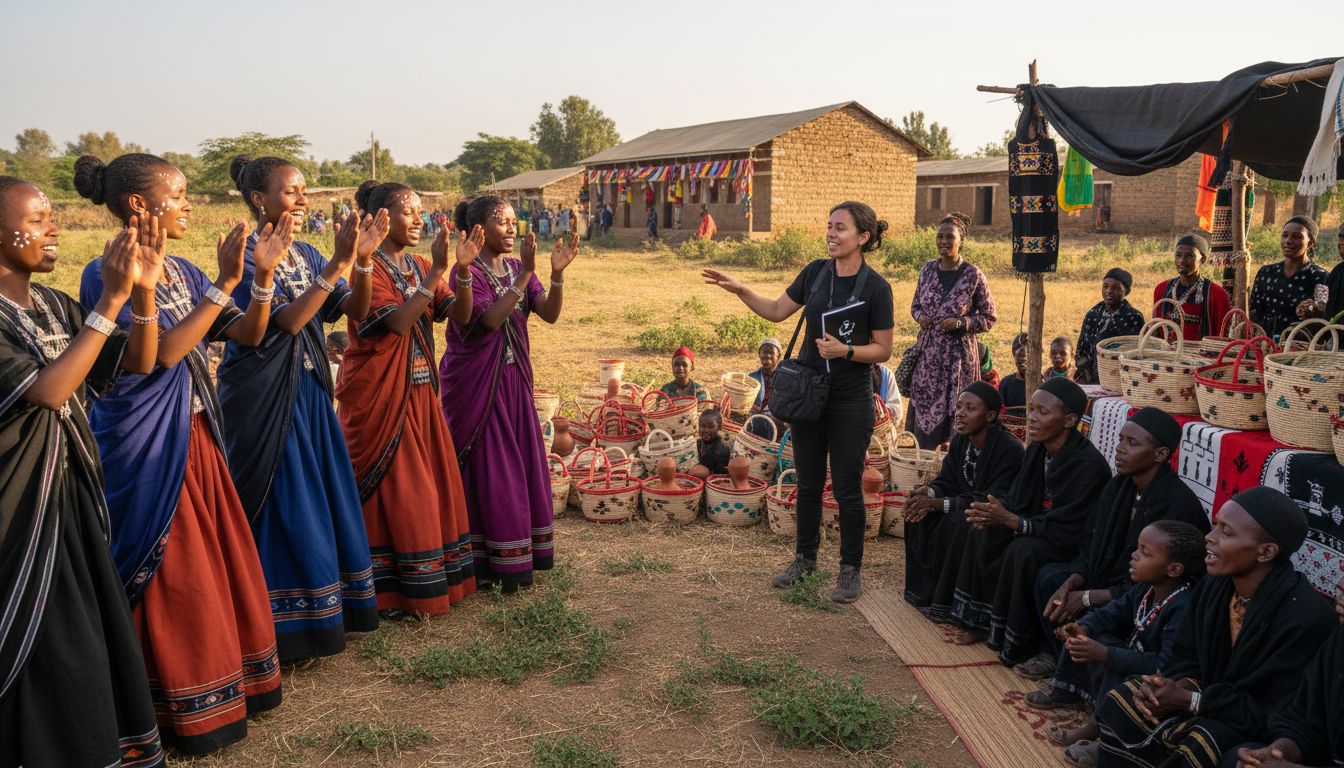 From the highlands of Tigray to the expansive Oromo regions, these cultural expressions showcase the extraordinary diversity and resilience of Ethiopian heritage.
Key highlights of Ethiopian cultural traditions include:
- Deeply spiritual and communal celebration practices
- Preservation of ancestral customs through generational transmission
- Unique regional festivals reflecting local ethnic identities
- Intricate traditional clothing and performance arts
For those eager to experience these extraordinary cultural celebrations firsthand, Ethiopia Festival Tours offers an immersive journey into the heart of Ethiopia’s most vibrant traditions, providing travelers with an authentic window into the nation’s living cultural heritage.
World Heritage Sites And Natural Wonders
Ethiopia’s landscape is a breathtaking canvas of extraordinary natural and historical treasures, offering travelers an unparalleled journey through both geological marvels and human architectural achievements. From ancient rock-hewn churches to dramatic mountain landscapes, the country presents a unique blend of cultural and natural wonders that captivate the imagination and challenge conventional understanding of human potential.
At the heart of Ethiopia’s historical splendor are the Rock-Hewn Churches of Lalibela, a testament to remarkable human engineering and spiritual dedication. According to UNESCO World Heritage, these 11 medieval monolithic churches are carved directly out of solid rock, representing an extraordinary architectural achievement that defies conventional construction methods. Each church tells a story of profound faith, intricate craftsmanship, and the incredible engineering skills of medieval Ethiopian civilizations.
Complement these cultural marvels with the Simien National Park, a natural wonder that showcases Ethiopia’s extraordinary biodiversity. As recognized by UNESCO World Heritage, this park is renowned for its dramatic landscapes, featuring deep gorges, dramatic plateaus, and unique wildlife found nowhere else on the planet. The park’s rugged terrain creates an ecological sanctuary that provides habitat for rare species like the Ethiopian wolf and the gelada baboon, making it a critical conservation site and a breathtaking destination for nature enthusiasts.
These World Heritage Sites represent more than mere tourist attractions. They are living narratives of Ethiopia’s complex history, showcasing the intricate relationship between human creativity and natural environments. From the meticulously carved rock churches that seem to defy architectural limitations to the sweeping mountain landscapes that have witnessed millennia of ecological evolution, Ethiopia offers a profound journey through time and natural beauty.
Key highlights of Ethiopia’s World Heritage Sites include:
- Unparalleled architectural achievements
- Unique geological formations
- Rare and endemic wildlife species
- Living cultural and natural heritage
- Exceptional conservation efforts
For travelers seeking to explore these extraordinary destinations, Day Trips from Addis Ababa provide an ideal gateway to discovering Ethiopia’s most remarkable natural and cultural landscapes, offering curated experiences that capture the essence of this extraordinary country.
Heritage Tourism Benefits Local Communities
Heritage tourism represents far more than a simple economic transaction. It is a powerful mechanism for cultural preservation, community empowerment, and sustainable development that transforms local economies while protecting and celebrating indigenous traditions. In Ethiopia, this approach has emerged as a critical strategy for bridging economic opportunities with cultural integrity.
Research demonstrates the profound impact of heritage tourism on community development. According to ResearchGate, heritage tourism has been instrumental in creating substantial employment opportunities, promoting meaningful cultural exchange, and generating crucial income that directly supports local infrastructure and essential community services. This approach ensures that tourism becomes a collaborative process where local communities are active participants rather than passive observers.
The economic benefits extend far beyond immediate financial gains. When communities are empowered to showcase their cultural heritage, they develop a sense of pride and ownership that reinforces cultural identity. Local artisans, guides, hospitality workers, and storytellers become ambassadors of their own traditions, transforming tourism into a mutually beneficial cultural dialogue. This model creates economic incentives for preserving traditional knowledge, crafts, and practices that might otherwise be at risk of disappearing in a rapidly modernizing world.
Moreover, heritage tourism generates a ripple effect of positive community transformations. By creating economic opportunities directly linked to cultural preservation, communities find sustainable ways to maintain their unique traditions while simultaneously improving their quality of life. Young people are motivated to learn and preserve traditional skills, local economies become more diversified, and cultural practices gain renewed relevance in a global context.
Key benefits of heritage tourism for local communities include:
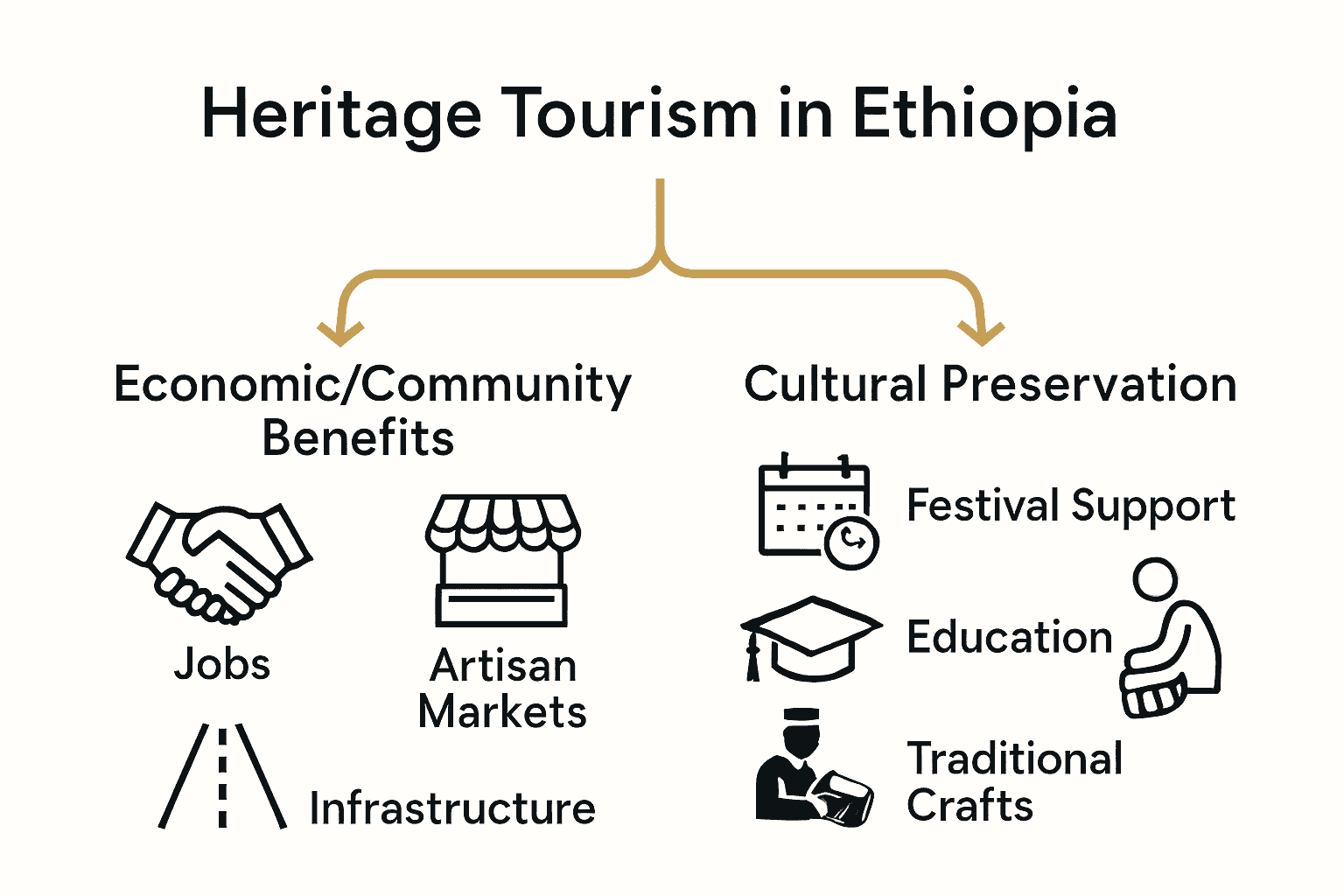
- Direct job creation across multiple sectors
- Preservation of traditional cultural practices
- Enhanced community infrastructure
- Increased economic diversification
- Strengthened cultural pride and identity
For travelers interested in experiencing these meaningful cultural exchanges, Northern Ethiopia Cultural Tour offers an authentic journey that directly supports and celebrates local communities while providing an unparalleled insight into Ethiopia’s rich cultural landscape.
Preservation Challenges And Conservation Efforts
Preserving cultural heritage is a complex and dynamic challenge that requires sophisticated strategies, collaborative approaches, and innovative solutions. In Ethiopia, the preservation landscape is characterized by both significant obstacles and remarkable resilience, where traditional knowledge intersects with modern conservation techniques to protect and revitalize cultural traditions.
One of the most promising approaches to heritage preservation comes through international recognition and documentation. According to UNESCO, the organization’s recognition of Ethiopian festivals like Meskel and Irreechaa has been instrumental in safeguarding intangible cultural heritage. By officially documenting and promoting these traditions, UNESCO helps create global awareness and provides critical support mechanisms that encourage local communities to maintain and celebrate their unique cultural practices.
The preservation challenges are multifaceted and profound. Rapid modernization, urbanization, and generational shifts pose significant risks to traditional practices, with younger generations increasingly disconnected from ancestral knowledge systems. Economic pressures often force communities to prioritize immediate survival over cultural preservation, creating a potential erosion of rich traditional practices. Conservation efforts must therefore be holistic, addressing not just the cultural artifacts and traditions, but also the socioeconomic contexts that support their continued existence.
Successful preservation strategies require a delicate balance between protection and adaptation. This means creating economic opportunities that make traditional practices economically viable, developing educational programs that transmit cultural knowledge to younger generations, and developing documentation systems that capture the nuances of living cultural traditions. The goal is not to fossilize culture, but to allow it to evolve organically while maintaining its core authenticity and significance.
Key strategies for cultural heritage preservation include:
- Comprehensive documentation of traditional practices
- Community-led conservation initiatives
- Educational programs for younger generations
- Economic models that support cultural preservation
- International collaboration and recognition
For travelers interested in supporting these vital conservation efforts, Day Trips from Addis Ababa offer opportunities to engage with and learn about Ethiopia’s rich cultural preservation landscape, providing meaningful experiences that directly contribute to ongoing heritage conservation work.
Experience Ethiopia’s Living Heritage With Authentic Local Experts
Exploring Ethiopia’s rich heritage goes beyond sightseeing It involves overcoming the challenge of connecting deeply with a living culture that holds ancient traditions and vibrant community rituals intact. Whether you are drawn to the iconic rock-hewn churches or the spectacular festivals like Meskel and Irreechaa, the goal is to witness these remarkable experiences while respecting and preserving their authenticity. Spectrum Ethiopia Tours understands the importance of this balance and offers you a chance to engage intimately with Ethiopia’s diverse cultural fabric. Our expert guides are rooted in local knowledge and committed to responsible tourism ensuring you do not just observe but truly belong to the heritage journey.
Discover how your travels can support local communities and cultural preservation with thoughtfully designed itineraries that focus on real human encounters and cultural respect. Be part of something meaningful by choosing tours like the Northern Historic Route or the South Omo Valley cultural journey crafted for families, individuals, and small groups.
Begin your immersive adventure today with Spectrum Ethiopia Tours.

Ready to uncover Ethiopia’s timeless cultural treasures on a safe, customized tour? Visit Spectrum Ethiopia Tours now and secure your place on a journey that celebrates heritage while creating lasting community impact. Explore our signature trips and experience Ethiopia like never before with expert local guides by your side.
Frequently Asked Questions
What makes Ethiopian heritage unique?
Ethiopian heritage is unique due to its unbroken cultural continuity, remarkable diversity across multiple ethnic groups, deep spiritual traditions, and sophisticated social rituals that emphasize community connection.
What are some important cultural festivals in Ethiopia?
Cultural festivals in Ethiopia include Meskel, which celebrates the finding of the True Cross, Ashenda, which marks the end of fasting for Tigray women, and Irreechaa, the Oromo people’s Thanksgiving festival, each carrying deep historical and spiritual significance.
How does heritage tourism benefit local communities in Ethiopia?
Heritage tourism benefits local communities by creating jobs, preserving traditional cultural practices, enhancing infrastructure, improving quality of life, and fostering cultural pride and identity.
What challenges does Ethiopia face in preserving its cultural heritage?
Ethiopia faces challenges such as rapid modernization, urbanization, and disconnection of younger generations from ancestral knowledge, necessitating holistic preservation strategies that balance protection with cultural evolution.